
Off Their Game


Ex-NFL player’s company got $55K in Dauphin County gaming grants for a project that’s stalled
A commissioner says the situation, with money given for homes that aren’t built, shows a ‘lack of due diligence over decades.’
To many Harrisburg-area football fans, Noah Spence is a hometown hero.
Before he was a 2016 NFL draft pick for the Tampa Bay Buccaneers, the defensive end was an honors student at Bishop McDevitt High School and Pennsylvania’s Gatorade Player of the Year. In 2012, when Spence was a high school senior, the Dauphin County commissioners presented him with a proclamation and praised him as a role model.
“I’ll make you guys proud,” Spence told the commissioners.

A decade later, Spence began organizing an affordable housing project in Steelton. The project, Spence said, would work with education nonprofit Neighboring Academy to help Steelton-Highspire School District students gain valuable trade skills by helping build five housing units out of shipping containers. Dauphin County commissioners awarded Spence’s company, Diverse Investments Group, $55,000 in public gaming dollars.
But more than three years since the company was awarded its first grant, no homes have been built and no building permits or land have been secured for the project.
Spence’s company purchased two plots of land for the project but has not paid taxes on them, so Steelton and the school district — whose students the project is meant to benefit — are fighting in court to collect a total of $6,445 worth of taxes. Likewise, the county is owed more than $1,500 in unpaid taxes and put the properties up for auction in September.
Spence attributed the delays in the project to Neighboring Academy, which he insists has been closely involved from the beginning. The CEO of Neighboring Academy, however, said they have no formal partnership.
The county’s Industrial Development Authority is supposed to follow up to make sure projects are on track, but didn’t. The agency cut checks for invoices with vague descriptions about the work and waived requirements for any follow-up reports or audits.
Spence told PennLive the project is still in motion.
“We won’t let it fall to the wayside,” he said.
But financial experts said the lack of movement on the project raises questions.

“When public funds have already been awarded and the project hasn’t moved forward in two to three years, it could be a red flag that something is wrong. The government really has the duty to ask what progress has been made, when it’s expected to be completed,” said Jason Zirkle, training director for the Association of Certified Fraud Examiners and a former financial crime analyst for the Texas Rangers, an investigative law enforcement agency.
The project isn’t the only controversial venture between Spence and the county. Spence was paid $25,000 in 2024 to connect the nonprofit arm of the county’s housing authority with a funder for a major project, but the deal fell through, and Spence hasn’t repaid the money, according to the authority’s executive director. Spence said he fulfilled his end of the bargain by connecting the agency with a qualified lender, and what happened after that had nothing to do with him.
County Commissioners Mike Pries, George Hartwick and Chad Saylor approved the first gaming grant to Spence’s company, while Pries, Hartwick and Commissioner Justin Douglas approved the second.
Douglas and Pries both said they were unaware of the situation before PennLive brought it to their attention.
“I’m concerned if we’re providing grant allocations and the money’s going into a black hole,” Pries said.
Douglas agreed.
“Look, these grants are substantial money that could go to the betterment of our community. I’m concerned that that is not the metric guiding these decisions when we have people of influence getting large sums of money and then billing against it from their own owned companies,” Douglas said.
The idea to apply for gaming grants for the affordable housing project started with Spence’s connection to Neighboring Academy through his mom and Neighboring Academy CEO Chad Frey, Spence said.
Helen Spence, his mom, works for Dauphin County’s human services department and volunteers at Neighboring Academy as a program advisor. She and Frey are working to create a makerspace for students out of shipping containers on Steelton-Highspire School District property. That project also received two gaming grants in 2023 and 2024, totaling $58,750.
The plan is for students at Neighboring Academy’s makerspace to help build Spence’s shipping container homes through a trade program, and for students to live in the homes with their families or help sell them, Spence said.
“My biggest thing is trying to give the community, or the kids of the community, another route to learn real estate, learn a trade, learn how to benefit from their own selves, from their own work,” Noah Spence said.

He attributed the delays in his affordable housing project to Neighboring Academy’s makerspace not being completed yet, and said once the makerspace is built, the project will be back in motion.
“That’s who we’re connected to, and the kids won’t be there to piggyback off of them and work on our container homes until that is pretty much up and running,” he said.
But Frey, the leader of Neighboring Academy, said that was news to him.
“The Neighboring Academy has not guaranteed or promised anything to the effect that students will be building Diverse Investment Groups homes,” Frey wrote in an email. According to him, the projects are separate, other than the fact that they are both aiming to increase homeownership opportunities in the community.
Frey interpreted Spence’s remarks about their supposed partnership as “more aspirational than literal” and said the projects have not contracted with one another, nor are they legally partnered.
“It’s common sense that high school students are simply not capable of building out a housing project from scratch themselves. They don’t have the professional skills, experience or expertise to do this kind of work,” he said. “If they wanted to become licensed contractors and real estate agents in the future then maybe … but that’s entirely up to them.”
When PennLive told Spence of Frey’s comments, Spence replied, “Chad Frey doesn’t run the academy alone and it is the plan he may have forgot once again because it was years ago. This was and is the whole point of the project.” He added that Frey and his mother, Helen, were spearheading the project.
Frey reiterated the two projects have no formal partnership.
“I share Noah’s hope that some day interested Neighboring Academy students might be able to own homes and help work on Diverse Investment Group’s housing project in some capacity if it comes to fruition,” Frey wrote in response to questions from PennLive. “But having that aspirational vision & hope should not be mistaken for having a mutually agreed upon understanding of a solidified plan (as you described) to have students work on the housing project.”
When PennLive reached out to Helen Spence to clarify the relationship between her son’s housing project and Neighboring Academy, she said her understanding was they were supposed to be connected down the road, but she was not involved in the housing project.
“That’s his project. That’s not my project at all,” Helen Spence said.
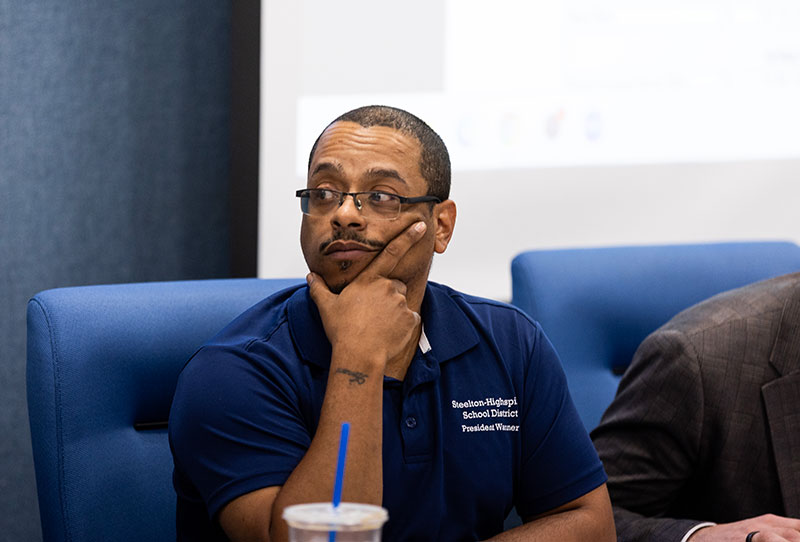
Steelton-Highspire School Board President Micheal Wanner said Neighboring Academy has been working with students for years. The school board approved the organization’s planned makerspace on the condition it also got approval from Swatara Township and the Pennsylvania Department of Education. But the board knew far less about Noah Spence’s housing project, he said.
“It wasn’t anything that was formally presented to us,” Wanner said.
There is one other connection between the two projects: Neighboring Academy used $25,000 of its gaming grant money to pay Noah Spence’s company, Diverse Investments Group, to procure, ship and offload three shipping containers. Frey said they chose to contract with Spence’s company because it was also working in Steelton and had access to shipping containers at reasonable rates.
Diverse Investments Group purchased those shipping containers from a company in Ohio, where they have been sitting for two years.
“Why are we buying stuff from Ohio?” said Douglas, the commissioner, when PennLive brought it to his attention. “Why is this not staying in Pennsylvania? Even more so staying in Dauphin County?”
Frey explained Neighboring Academy’s project was delayed due to a lengthy land approval process and replacement of a water main on the school’s property last year. He said once the approval process is complete and the project secures additional funding, they will bring the shipping containers in and start building.
Spence said he was also planning to partner with the Neighborhood Assistance Corporation of America (NACA), a nonprofit that provides more than 30% of the housing counseling in the country and specializes in affordable housing.
NACA CEO Bruce Marks said he and Spence discussed potentially partnering on the project over a year ago, but NACA hadn’t vetted the project nor finalized any sort of agreement with Spence. All developers who partner with NACA have to go through a rigorous backgrounding process, and all projects must meet certain quality and affordability standards.
“Clearly, we wouldn’t move forward until we do our homework,” Marks said.

In 2023, Spence used his money to purchase two properties in Steelton for $1,000 each at auction. He hoped the properties, one on North Third Street and the other on Columbia Street, would become the sites of the shipping-container homes.
But Diverse Investments Group, his company, has not paid taxes on either property.
Steelton and Steelton-Highspire School District have filed six civil court actions against Diverse Investments Group over the unpaid taxes. Sheriffs’ deputies tried to deliver legal notices to Diverse Investments Group at least eight times and failed.
The most recent time, in January, the sheriff’s deputy wrote that while trying to deliver the notice to the defendant, Diverse Investments Group, he spoke to Helen Spence, the homeowner and Spence’s mother, and she told the deputy she “does not know who the defendant is.”
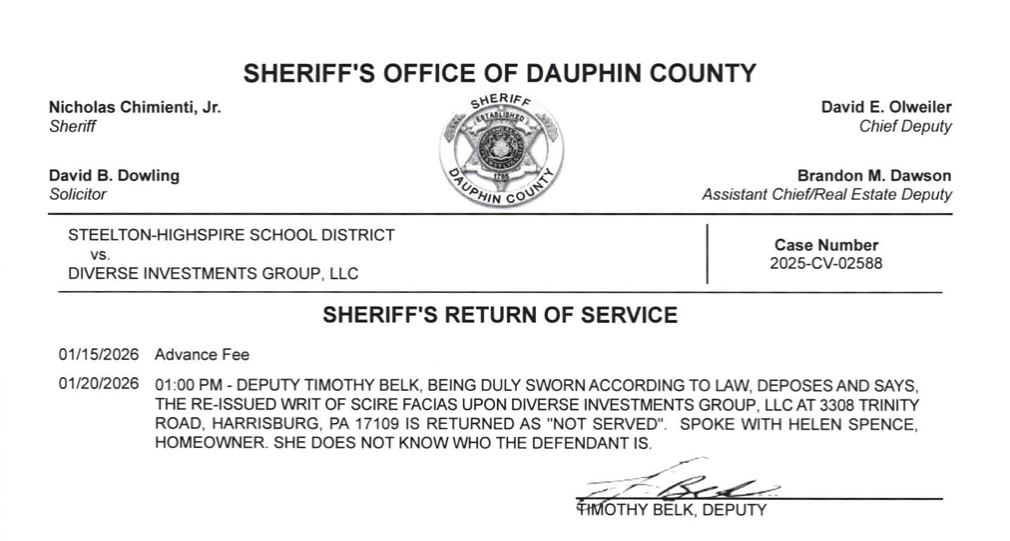
Dauphin County put the properties back up for auction in September but did not get any takers. Unless Diverse Investments Group pays the taxes it owes, the properties will be again offered for auction in 2027.
“They weren’t workable, so there was no reason for us to keep those,” Spence said.
Spence, who lives in Florida, said he was not aware the company owed taxes on both properties or that the school district was suing his company until PennLive brought it to his attention.
“If there’s anything that needs to be paid there, then we’ll just pay it,” Spence told PennLive on March 11. As of the time of this article’s publication, the taxes have not been paid, and the school district’s and borough’s court actions against Diverse Investments Group are active.
Michael Pfautz Jr., who is listed as COO of Diverse Investments Group on the grant materials, did not respond to multiple requests for comment.
Diverse Investments Group was registered as a company five weeks before applying for its first gaming grant, state business filings show. After receiving its first gaming grant, the company billed the county for $11,925 for blueprints from an Ohio-based shipping container supplier, which the supplier provided.
But Diverse Investments Group then sent the county a $25,000 invoice from another Ohio-based company, Ignite Holdings LLC. Spence is listed as an “authorized member, manager or representative” on Ignite Holdings’ business filings, and the business was registered with the state less than three months before the invoice was filed. The invoice contains only one line: “Due diligence new construction Harrisburg.”
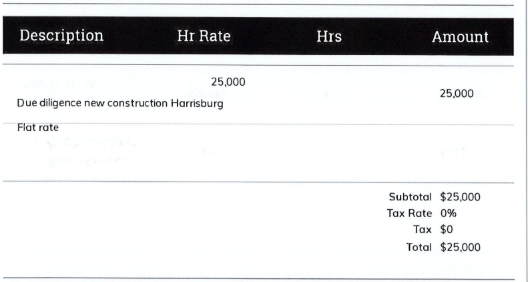
The county said it issued a check for that invoice, but the company never deposited it, and the check was voided.
Soon after, Diverse Investments Group sent the county a third invoice, this one for $30,000 to an Ohio-based company called “IGN Construction LLC.” Spence also owns that company, and the company was registered with the state of Ohio less than a month before the date of the invoice. The work cited is “survey 2 lots” and “engineering and architectural,” for $2,500 each, and a “down payment” for $25,000. Records show the county paid $18,075, the remaining balance of the grant.
Spence said he had already owned IGN Construction for a while at that point and needed to re-register the business. Ohio business records, however, do not show any prior filings for the company.
Spence said IGN Construction worked with one or two survey groups to do the work cited on the invoice.
When asked why the money wasn’t paid to the survey groups directly, Spence said he didn’t remember.
“Whatever we did get, we did use for the surveys,” Spence said.
That Spence’s company invoiced the county for work done by other companies Spence owns or is connected to is an “incredibly large red flag,” Douglas, one of the county commissioners, said.
“What is the purpose of the reimbursement process if the engineering company and the surveying company are simply going to be subcontracted out based on your LLC?” Douglas said.
Dauphin County does its best to eliminate fraud, a spokesperson said. That’s why the system is set up as a reimbursement program, in which grant recipients must provide detailed receipts or third-party invoices before any money is distributed, they said.
“To invoice from another business that you own, and then ask Economic Development to pay that, seems like you’re going around — potentially — the system that’s created as a safeguard to ensure that people aren’t just handed a $50,000 check,” Douglas said.
Spence is not the only person who has billed their own business within the gaming grant program.
While Neighboring Academy is a nonprofit, its gaming grants for the makerspace were awarded to Neighboring Group, a for-profit LLC where Frey is CEO. Neighboring Group submitted invoices for gaming grant money from Partnership Planners LLC, a consulting and tech company Frey owns. Those invoices totaled $30,000 and were for project management and pre-construction expenses like development designs, site planning and liaisoning with school district officials, according to Frey, though he declined to provide the invoices.
PennLive requested copies of the invoices from the county six months ago but has not received them.
Frey said using the gaming money to pay his own company to do the work isn’t a conflict of interest because his company has unique expertise in establishing makerspaces in urban public schools in the region and was able to connect with key business and education stakeholders. He also said his company could work at reduced hours for competitive rates.
The nonprofit arm of the county’s affordable housing authority is out $50,000 after another project Spence was involved in didn’t come to fruition.
A company in which Spence is the managing member was paid $25,000 in 2024 to broker a deal for Affordable Housing Associates of Dauphin County, but the deal fell through, and the company hasn’t paid the money back, said Leah Eppinger, executive director of the housing authority and board president of the nonprofit.
According to Eppinger, the contract between the nonprofit and the company, Legacy Path Estates LLC, stated the deposit was refundable if the company wasn’t able to produce a qualified lender for up to $30 million within 60 days.
The nonprofit also lost $25,000 from a due diligence fee it paid to the potential investors Spence connected it with, the Utah-based firm CHA Global Real Estate Trust.
“They stopped responding and never met deadlines, and then slowly just disappeared,” Eppinger said of the firm.
Lyle Pearson, who had been corresponding with Eppinger on behalf of CHA Global Real Estate Trust, said he responded to her last email in July but has not been involved with the firm since August. Pearson and other representatives of the company did not respond to further questions.
Eppinger said the nonprofit’s contract with Legacy Path Estates has a termination clause, and she sent termination notices to Spence’s email and the company’s mailing address, but never heard back.
Spence said he never received any notice and that he fulfilled his end of the bargain.
“I just brokered the connection; that’s what my job was, to bring them an investor group,” Spence wrote in a text message.
In another matter, three plaintiffs filed documents in Dauphin County civil court in November indicating their intent to sue Spence and Legacy Path Estates for monetary damages. It’s unclear why, as the plaintiffs have not filed a full complaint.
Spence said he does not feel he’s at fault and that they will have to go to court.
A request was made to the housing authority’s nonprofit board to join a pending multi-party lawsuit against Spence, Eppinger said. The board voted not to participate.
“I think the consensus was they didn’t want to spend more money on this project,” Eppinger said of the board’s decision.
Affordable Housing Associates’ nine-member board includes George Connor, executive director of the county’s economic development department and the IDA, which runs the gaming grant program. Eppinger and board member Doug Brown said Connor had been spearheading the deal with Spence.
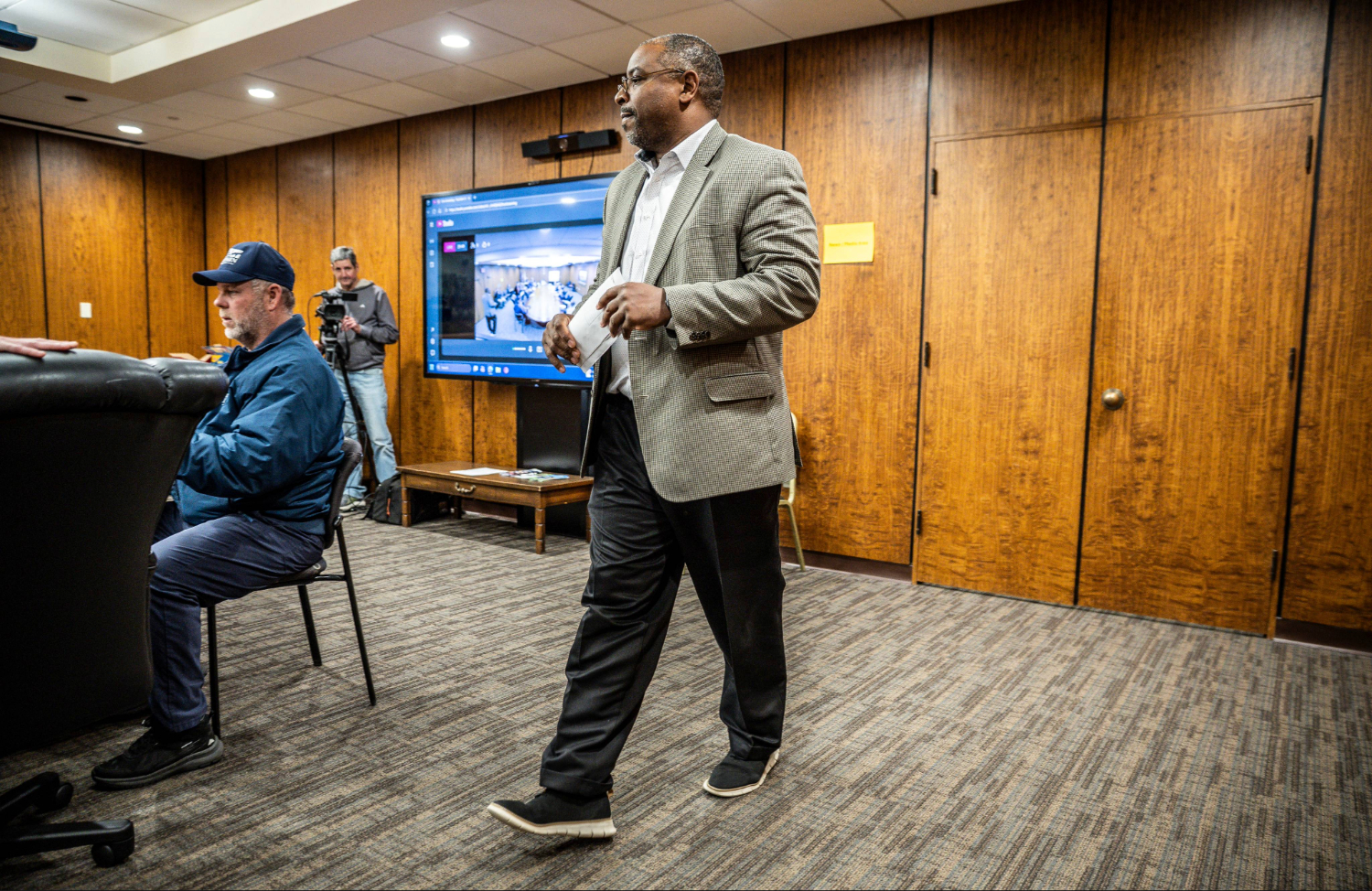
Connor did not respond to questions.
The pending civil case in Dauphin County isn’t the only legal action against Spence.
In a 2024 Ohio lawsuit involving Spence and another company he co-owns, Prime Innovation Trucking, Spence agreed to pay the plaintiffs $125,000 in monthly installments of at least $5,000 beginning in December 2025. But as of February, Spence still hadn’t paid any of the money back, court records show, prompting the plaintiffs to seize Spence’s ownership stake in a property he owns that was put up for collateral in the settlement.
Spence said he was “blindsided by the debt,” which he said was taken on before he was involved in the business, and he is paying it back with the property.
“The two court cases are just from things I didn’t know in business,” he said.
The situation with Spence’s company illustrates multiple breakdowns in the county’s gaming grant process.
The county’s gaming grant application does not ask about unpaid debts or ongoing court actions, and Diverse Investments Group’s applications did not say whether it had success with similar projects.
Diverse Investments Group’s two grant applications include little information on the proposed housing project. While both applications briefly mention a “partnership” with Neighboring Academy, they do not mention in what capacity, except to say Neighboring Academy connects students to educational opportunities using hands-on workforce experience.
Steelton sponsored both of Diverse Investments Group’s gaming grant applications. PennLive reached out to Council Member Michael Segina, former Borough Manager Anne Shambaugh and former Borough Manager Jack Gombach, who are listed as points of contact on the company’s grant materials. None returned calls, texts or emails.
Interim Borough Manager Chad Saylor, who approved the company’s first gaming grant while he was a county commissioner, also did not respond to multiple requests for comment.
The county’s Industrial Development Authority was supposed to monitor and inspect the project throughout the course of the funding and construction phases, according to the grant agreements. But that did not happen.
When asked why, a county spokesperson said the gaming grant program has significantly grown since the program was created.
“There is simply insufficient capacity to conduct regular project inspections as originally envisioned in the program,” the spokesperson wrote in an email.
The grant agreements also state Spence’s company was required to submit 90-day progress reports and a final project audit, but those didn’t occur, either.
Those weren’t needed, a county spokesperson said, because the IDA reviewed the payments and reimbursements.
The IDA waives the final audit requirement for most gaming grants, another county spokesperson said.
Douglas called the absence of audits “incredibly concerning.”
“It’s really indicative of our economic development department’s lack of due diligence over decades,” he said.
Diverse Investments Group’s grant agreements say the county can claw back the funding if the project isn’t initiated by the contract’s expiration date, in 2027, or if the funds are improperly used.
In some other counties, grant applicants are required to fill out forms showing they have paid their taxes to be eligible for grants, and grantees are required to complete audits or closeout reports demonstrating the public benefit the funding provided.
Zirkle, the certified fraud examiner, condemned the practice of waiving audits and progress reports.
“You put internal rules in place for a reason, and it’s to protect the money,” Zirkle said. “Public agencies absolutely have a duty to be good stewards of public funds.”
The Dauphin County commissioners would support making changes to the grant program, including requiring more post-project reviews and having checks in the process to ensure grantees have paid their taxes, a spokesperson said in an emailed statement.
Douglas said he thinks the gaming grant program needs a significant overhaul.
“We just need to hit the reset button,” he said. “I want a process and a program that I can trust in, and I don’t trust this program right now. And I really never have.”
Editor’s Note: This story was updated April 15 after Eppinger said she learned the pending lawsuit was multi-party.
What did we miss? Reach reporter Juliette Rihl at jrihl@pennlive.com or by encrypted email at jrihl@proton.me. Anonymous tips are welcome.
This story was fact-checked by Christine Vendel.
Jonathan Bergmueller contributed reporting to this story.
This reporting was supported by the Fund for Investigative Journalism and the Pennsylvania NewsMedia Association Foundation.